For a century, the grid was a solved problem — a stable backbone that delivered power from big central plants to predictable demand. The energy transition breaks that model. Wind and solar are built where the resource is best, not where the people are, which means far more long-distance transport is needed. At the same time, electrification (EVs, heat pumps, electrolysers) is pushing demand up faster than in previous decades. The result, in the IEA's words, is that grids risk becoming "the weak link of clean energy transitions" — under-built for the job now being asked of them.
The bottleneck nobody talks about
The IEA's 2023 report, Electricity Grids and Secure Energy Transitions, is the clearest statement of the scale. To meet national climate and energy goals, the world needs to add or refurbish more than 80 million kilometres of grids by 2040 — roughly the equivalent of the entire existing global grid. Yet grid investment has been stuck at about USD 300 billion per year, and the IEA says it must double to more than USD 600 billion per year by 2030. Meanwhile, at least 3,000 gigawatts of renewable projects — about 1,500 GW in advanced stages — were waiting in grid-connection queues, equivalent to roughly five times the solar and wind added globally in 2022. The hardware exists; the pathway to plug it in does not.
Why generation is faster than wires
A large part of the problem is timing. The IEA notes new grid infrastructure typically needs 5–15 years from planning and permitting to completion, while a renewable project takes about 1–5 years and EV charging less than 2. In the United States, the grid is split into three largely separate synchronous interconnections, and interregional transfer capacity is limited — so power-rich regions cannot easily send surplus to neighbours. U.S. interconnection queues have swelled past 2 terawatts of proposed solar, wind and storage, according to tracking by Lawrence Berkeley National Laboratory, with wait times stretching years. Generation keeps arriving; the wires to move it do not.
The cheap win: squeeze more out of what we have
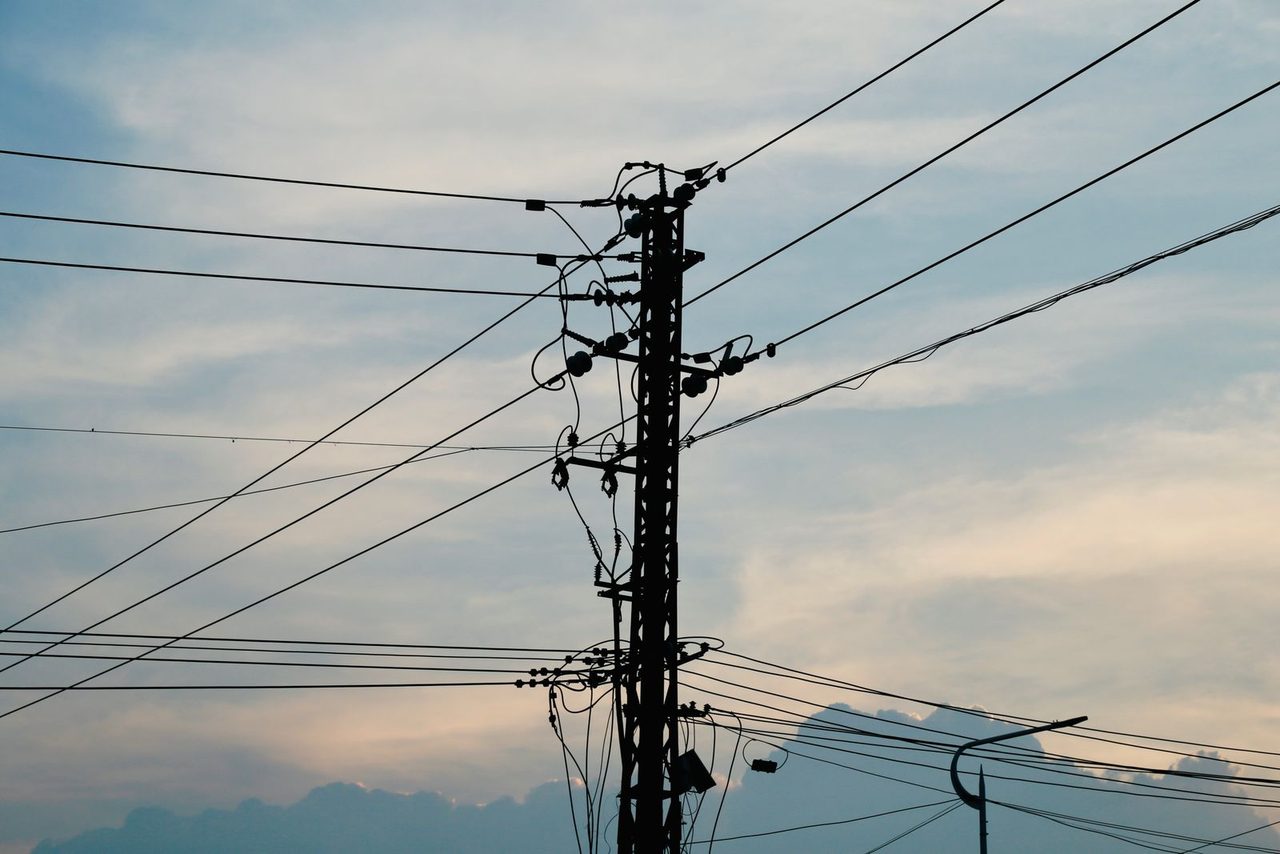
Building brand-new transmission corridors is slow, expensive and politically fraught. The smarter first move is to get more from the lines already standing. Grid-enhancing technologies (GETs) — advanced conductors that carry more current, dynamic line rating that raises limits when weather allows, and power-flow controls that route electricity more efficiently — can unlock meaningful capacity without new corridors. Research by groups such as the World Resources Institute and the Brattle Group has found that these upgrades can deliver capacity at a fraction of the cost and time of conventional construction, and can be deployed in months rather than the better part of a decade. Reconductoring — swapping old wires for modern ones on existing towers — is another high-leverage, low-footprint option.
What good looks like
The places making progress share a habit: treat the grid as a network, not a collection of local systems. Interconnectors between regions let surplus wind or solar in one area cover a shortfall in another, smoothing both prices and emissions. High-voltage direct current (HVDC) lines move large amounts of power over long distances with lower losses — exactly what remote offshore wind and desert solar need. China and India have built sweeping ultra-high-voltage networks for this reason, and Europe is expanding cross-border links. Each of these reduces the need to burn fossil plants locally when the nearest clean source is temporarily constrained.
The takeaway
The energy transition is increasingly a transmission project. The IEA's own "Grid Delay Case" shows that under-investing adds roughly 60 billion tonnes of extra CO2 between 2030 and 2050 because renewables are delayed and fossil plants fill the gap — pushing the odds of exceeding 2°C to about 40%. The fix is not glamorous: modernise and interconnect the grid, streamline permitting, and use cheap upgrades to wring more capacity from lines already in the ground. As IEA executive director Fatih Birol put it, the choice is simple — "invest in grids today or face gridlock tomorrow."
Frequently asked questions
Why can't we just build more solar and wind?
We can build the panels and turbines faster than we can connect them. The IEA reports at least 3,000 gigawatts of renewable projects — about 1,500 GW in advanced stages — were waiting in grid-connection queues, equivalent to roughly five times the solar and wind added globally in 2022. Without transmission to carry that power from windy and sunny regions to cities, finished projects sit idle.
What are grid-enhancing technologies?
They are low-cost upgrades that squeeze more capacity out of lines we already have: advanced conductors that carry more current, dynamic line rating that raises limits when weather allows, and power-flow controls that route electricity more efficiently. Because they avoid building entirely new corridors, studies by groups such as the World Resources Institute and the Brattle Group find they can unlock capacity at a fraction of the cost and time of new construction.
How long does it take to build new transmission?
The IEA notes new grid infrastructure typically needs 5–15 years from planning and permitting to completion, whereas a new renewable project takes about 1–5 years and EV charging less than 2. That mismatch is a core reason queues lengthen: generation arrives long before the wires to move it do.
Does more transmission really cut emissions?
Yes. The IEA's Grid Delay Case shows that under-investing in grids adds roughly 60 billion tonnes of extra CO2 between 2030 and 2050 because renewables are delayed and fossil plants fill the gap — pushing the odds of exceeding 2°C to about 40%. More and smarter grids let cheap clean power actually reach demand, displacing coal and gas.
What can an individual do?
Most transmission decisions are made by utilities and regulators, so the highest-leverage moves are civic: support grid-modernisation and interconnector projects in public consultations, back policies that streamline permitting without sacrificing review, and consider time-of-use electricity tariffs that reward shifting load to cleaner, less-congested hours.
This page is an informational compilation. For reference only — please refer to each source's official documentation.
Images: Pexels (free license) · Photos by contributors on Pexels.
Privacy Policy · Contact