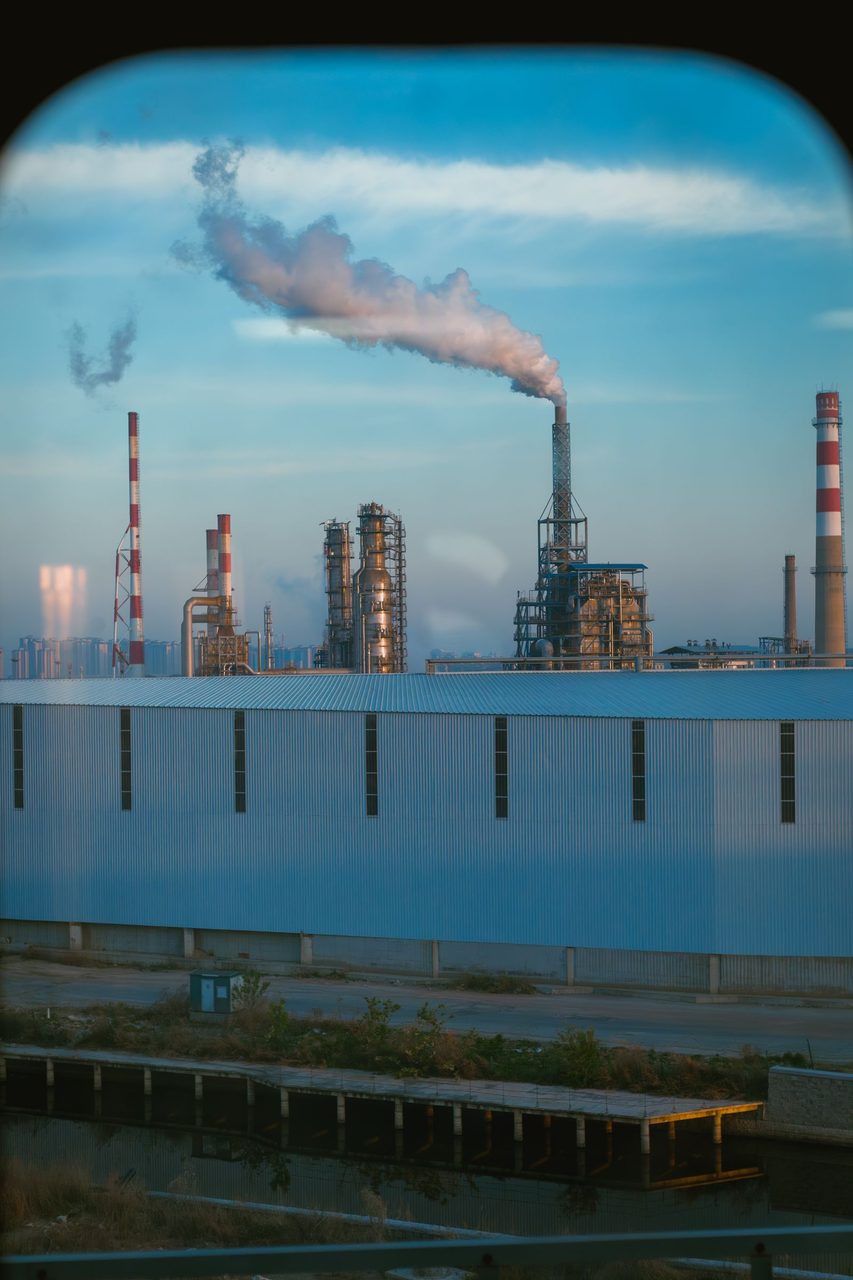
What green hydrogen actually is - and why it got so much hype
Green hydrogen is produced by splitting water into hydrogen and oxygen using renewable electricity. The process - electrolysis - emits no carbon at the point of production, which is the entire appeal: a fuel that burns cleanly and can be stored like a chemical, produced without fossil fuels. The promise captured the imagination of governments and investors because hydrogen seemed to offer a universal answer - fuel for transport, industry, heating and power, all decarbonised at once.
The hype outran the reality. The universal-fuel vision implied that hydrogen could substitute for electricity everywhere, when in fact electricity is far more efficient for most uses: an electric motor converts about 90% of input energy to motion, while a hydrogen fuel cell manages about 40-50% after the round trip of electrolysis, compression, transport and conversion. For anything that can run on batteries or direct electricity, hydrogen is a poor choice. The industry spent years discovering which problems hydrogen is actually the right answer for - and which it is not.
Where hydrogen genuinely works
The honest list of hydrogen's essential uses is shorter than the hype suggested, but it is real. The first is heavy industry: steel, cement and chemicals need high-temperature heat and chemical reactions that electricity cannot easily provide. Hydrogen - or hydrogen-based products like direct-reduced iron - is the main decarbonisation route for steel, and industrial clusters in Europe, Japan and China are building hydrogen-ready plants. The second is the chemicals sector, where hydrogen is already consumed at enormous scale in ammonia and refining; replacing the 'grey' hydrogen made from gas with green hydrogen cuts emissions without changing the process. The third is long-distance transport that batteries cannot serve: shipping and aviation need dense, portable energy, and hydrogen-based fuels - ammonia for ships, synthetic kerosene for planes - are the leading candidates.
The common thread is that hydrogen works where batteries do not - where the energy density, weight or charging time of a battery is disqualifying, or where the process itself needs hydrogen as a chemical input. The sectors that fit this description are responsible for a large share of global emissions - around a fifth of energy-related emissions come from industry, shipping and aviation - which is why hydrogen still matters enormously even after the hype has cooled.
Where hydrogen does not work
Equally important is the list of places hydrogen has been tried and should be abandoned. Road transport is the clearest case: the battery-electric future has won. Every major market is building charging infrastructure, battery prices keep falling, and hydrogen's 40-50% efficiency disadvantage is fatal when batteries work. Hydrogen buses, trucks and cars are not dead - a few niche operators keep the technology alive - but the volume will be tiny compared with electric.
Heating buildings is the second false start. The idea of piping hydrogen into homes and boilers was promoted by gas utilities as a way to preserve their infrastructure, but the analysis is damning: converting a heating system to hydrogen is expensive, the efficiency is poor, and heat pumps do the same job at a fraction of the energy cost. Several European countries that piloted hydrogen heating have quietly cancelled the programmes. The verdict is in: hydrogen for home heating is a dead end, and the infrastructure money is better spent on electrification and efficiency.
The economics: subsidies, auctions and the cost curve
The economics of green hydrogen have improved but remain the central constraint. Green hydrogen costs several times more than the grey hydrogen made from natural gas - the gap has narrowed from roughly 4-6x a few years ago to roughly 2-3x in the best locations, but it has not closed. The two cost drivers are the price of electricity (which is half the cost of green hydrogen) and the cost of the electrolysers (which is falling along a learning curve that resembles solar and batteries).
Governments have responded with the largest subsidy programmes in the industry's history. The European Hydrogen Bank and the US hydrogen production tax credits have committed tens of billions, and the first auctions produced striking results: winning bids came in well below the maximum prices governments were willing to pay, suggesting the cost curve is bending faster than expected. The most cost-effective projects are in the places with the cheapest renewable electricity - Texas, the Middle East, Australia, Chile - which are positioning themselves as hydrogen export hubs.
The infrastructure bottleneck
The single biggest obstacle to the hydrogen economy is not production - it is moving the stuff. Hydrogen is the smallest molecule in existence, which makes it fiendishly difficult to handle: it leaks through seals that hold other gases, it embrittles steel over time, and it needs either extreme compression (hundreds of atmospheres) or cryogenic cooling to minus 253 degrees Celsius to store compactly. Every pipeline, tank and valve in the hydrogen chain is more expensive and more failure-prone than its natural-gas equivalent.
The infrastructure gap is a chicken-and-egg problem. Industry will not switch to hydrogen until the supply is reliable; producers will not build supply until the demand is contracted; and both wait on pipelines and storage that no one has built yet. The breakthrough projects of the next few years are the industrial clusters that solve this by co-locating: producing hydrogen where it will be used, avoiding the transport problem entirely. The alternative model - importing hydrogen from cheap-production regions - will depend on international shipping of ammonia, which is technically proven and now being commercialised.
The projects that matter in 2026
The proof points of 2026 are concrete. The world's first commercial-scale green steel plants are ramping up in Sweden and Spain, replacing coal-based reduction with hydrogen-based direct reduction. The largest green ammonia plants are under construction in Australia and the Middle East, targeting both fertiliser and shipping fuel. And the first green hydrogen refineries are operating in Europe, substituting renewable hydrogen for the fossil-derived hydrogen those sites already use. These are not pilot projects - they are commercial plants with real offtake contracts - and their operating economics are the data that will decide the next wave of investment.
The signal from the markets is clear: green hydrogen is real where it is essential, and the money is consolidating there. The projects being built are concentrated in steel, ammonia and refining - the sectors that have no other decarbonisation route - and the transport and heating experiments have been wound down. The industry is smaller and more honest than it was in the hype years, and it is finally building things that will still be running in thirty years.
The bottom line
The hydrogen economy in 2026 is real, focused and patient. It is not the universal fuel that early marketing promised - batteries won the road, heat pumps won the home, and hydrogen has retreated to the sectors where its unique properties are genuinely needed. But those sectors - heavy industry, shipping, aviation - are responsible for a fifth of global emissions, and hydrogen is their main decarbonisation route. The subsidy money is working, the first commercial plants are operating, and the cost curve is bending. The infrastructure remains the long pole, and the next decade will be spent building it. The direction is right; the pace is the question.
The steel story in depth
Steel is the single clearest case for green hydrogen, and the industry's transition is worth understanding in detail. Conventional steelmaking blasts iron ore with coal in a blast furnace, emitting roughly two tonnes of CO2 per tonne of steel - which is why steel accounts for nearly a tenth of global emissions. The hydrogen route replaces the coal with hydrogen in a process called direct reduction: hydrogen reacts with iron ore to produce iron and water, emitting nothing but water vapour. The resulting iron can then be melted in an electric arc furnace powered by clean electricity.
The first commercial green steel plants are operating in Sweden and Spain, and the economics are being learned in real time. Green steel costs more than conventional steel - the premium is real and will persist until hydrogen and electricity prices fall further - but the customers are there: automakers, construction firms and governments have all signed offtake agreements paying the green premium, because their own net-zero commitments require low-carbon materials. The 'green steel premium' has become a market of its own, and the buyers are treating it as the cost of doing business in a decarbonising world.
The scale challenge is the honest caveat. Replacing the world's steel capacity with the hydrogen route is a decades-long project requiring enormous quantities of hydrogen and electricity. The early plants are demonstration scale; the retrofit of the existing fleet - most of it in China - is a separate and slower problem. But the direction is set: every new steel plant planned in the EU must now demonstrate a decarbonisation pathway, and the hydrogen route is the only one that works at scale. Steel is where the hydrogen economy is not a bet but a necessity.
Shipping and aviation: the hard-to-abate transport
Shipping and aviation are the transport sectors where batteries cannot work and hydrogen-based fuels are the leading candidates. A container ship crossing the Pacific needs energy density that no battery can provide at feasible weight and cost, and an intercontinental airliner faces the same constraint with the added requirement that the fuel be cheap and safe. The solutions being developed are hydrogen-derived fuels rather than hydrogen itself: ammonia for ships, which is already produced at scale for fertiliser and can be burned or used in fuel cells, and synthetic kerosene for planes, made by combining green hydrogen with captured carbon.
The regulatory pressure is forcing the change. The International Maritime Organization has set binding decarbonisation targets for shipping, and the EU's 'Fit for 55' package includes maritime and aviation fuel mandates that require a growing share of green fuels. The fuel suppliers are responding: the first green ammonia bunkering facilities are being built in the major ports, and the first synthetic-kerosene plants are under construction in Europe and the US. The costs are high - green shipping fuel costs several times conventional bunker fuel - but the mandates and the carbon prices are narrowing the gap.
The investment logic is a bet on mandates. Investors are not betting that green fuels will win on cost - they know they will not, for years. They are betting that regulation will force the market to pay the premium, and that the first movers will capture the infrastructure and the contracts. The risk is real - the mandates could be delayed, the fuels could be challenged by alternatives, and the capital is enormous - but the direction of regulation is unmistakable, and the first-mover advantage in ports, plants and contracts compounds.
The comparative economics: hydrogen versus the alternatives
The honest framework for comparing hydrogen with its alternatives is a simple rule: use electricity directly wherever possible, use batteries where direct electricity is not feasible, and use hydrogen only where neither works. The efficiency numbers make the case. An electric vehicle converts about 90% of the energy it draws into motion. A hydrogen fuel-cell vehicle converts about 40-50% after the losses of electrolysis, compression, transport and conversion - meaning it needs roughly twice as much renewable electricity to travel the same distance.
The same logic applies to heat. A heat pump, driven by electricity, delivers three to four units of heat per unit of electricity. A hydrogen boiler delivers less than one unit of heat per unit of electricity used to make the hydrogen. The comparison is not close, which is why the hydrogen-for-heating experiments are being wound down. The sectors where hydrogen survives are the ones where electricity has no path: chemical reactions that need hydrogen as an input, and transport that needs energy density beyond batteries.
The strategic implication for governments and investors is to allocate hydrogen support where it is essential and avoid subsidising it where it is not. The countries that get this right - that fund steel, ammonia, shipping and aviation hydrogen while letting batteries and heat pumps do the rest - will decarbonise faster and cheaper. The countries that spread hydrogen money across transport and heating will waste billions and fall behind. The hydrogen economy is real, but it is narrower than the hype - and the winners will be the ones who see it clearly.
The hydrogen geography
The hydrogen economy has a geography, and it is already visible. The producing countries fall into three groups. The first is the industrial incumbents - the United States, China, Germany and Japan - which have large existing hydrogen industries and the demand base to absorb green hydrogen locally. The second is the renewable superpowers - Australia, Chile, Saudi Arabia, the Gulf states - which have world-class solar and wind resources and are positioning as export hubs, converting cheap renewable electricity into hydrogen and ammonia for sale abroad. The third is the early movers of Europe - the Netherlands, Denmark, Spain - which are building both production and import infrastructure, betting that hydrogen will flow across borders the way natural gas does today.
The trade picture is the least settled part of the geography. Hydrogen itself is expensive to ship - it must be compressed or liquefied, and both cost energy and money - which is why the early export trade is in ammonia, which is already shipped worldwide as fertiliser and carries hydrogen at a fraction of the cost. The ammonia shipping infrastructure exists; the green ammonia supply does not yet. The projections say the international trade in hydrogen and hydrogen-derived fuels will grow from negligible to tens of millions of tonnes a year by 2035 - a trade that will reroute some of the geopolitics of energy.
The security dimension is why the geography matters. Hydrogen offers the import-dependent economies of Europe, Japan and Korea a diversification option: a fuel source that is not tied to a few pipeline suppliers, and that can be produced by a wide range of countries, including domestic production. The same logic that drove the scramble for natural gas after the 2022 crisis is now driving hydrogen diplomacy - memoranda of understanding, investment funds and infrastructure deals between importing and exporting countries. Whether hydrogen becomes a genuine diversification or a niche supplement depends on the cost curve - but the geopolitical positioning is already underway.
The role of policy and the risk of subsidy dependency
The hydrogen industry is, for now, a policy creation. The subsidies - production tax credits, auction guarantees, infrastructure grants - are the difference between projects being built and projects staying on paper. The policy instruments have become sophisticated: the auctions pay for outcomes (green hydrogen delivered) rather than inputs, the tax credits are performance-based, and the certification schemes define what counts as green. The early auctions have produced competitive prices, which suggests the subsidy is catalysing real cost reduction rather than simply paying for the status quo.
The risk of subsidy dependency is real and recognised. If the support programmes expire before costs fall to market competitiveness, the projects built on subsidy will struggle to renew their economics, and the industry could collapse the way some solar markets collapsed when support was withdrawn. The counterargument is the learning curve: every subsidised gigawatt of production drags the cost curve down, and the auction results suggest the curve is moving faster than projected. The honest position is that the industry needs a decade of support to reach the point where it competes on its own - and that the support must be designed to phase out, not to persist.
The certification question is the quiet policy battle. What counts as 'green' hydrogen determines who gets the subsidies and who gets the mandates, and the definitional fight - over additionality (must the electrolyser run on new renewables or can it use the existing grid?), temporal matching (hourly or yearly?) and regional boundaries - has consumed the industry's policy energy. The EU's delegated acts set the strictest standard; the US took a looser approach. The definitions matter enormously because they set the cost structure of every project, and they are being contested in every forum.
The bottom line
The hydrogen economy in 2026 is best understood as a narrowing funnel. The hype promised a universal fuel; the reality is a specialist technology for the sectors that electricity and batteries cannot serve. Within that narrower frame, the momentum is real: the first commercial plants are operating, the cost curve is bending, the subsidy machinery is working, and the geography of producers and consumers is being drawn. The industry has survived its own hype cycle and emerged smaller, more honest and better positioned - the mark, in technology terms, of an industry that is becoming real.
The watchlist for the next few years is specific: the operating economics of the green steel plants, the first large ammonia cargoes, the electrolyser cost curve, the certification standards and the subsidy phase-out design. Each is a data point that will confirm or complicate the narrowing thesis. The risk that dominates is the cost risk - if hydrogen costs do not keep falling, the essential-use cases will still need hydrogen, but the scale will be smaller than the plans assume. The opportunity, equally, is the cost opportunity: if the curve bends faster, hydrogen becomes competitive in more sectors sooner. The industry is a bet on its own learning curve - and the evidence so far is that the bet is paying.
Sources & further reading
- IEA - Global Hydrogen Review — https://www.iea.org/topics/hydrogen
- European Hydrogen Bank - auction results — https://climate.ec.europa.eu/
- US DOE - Hydrogen Program — https://www.energy.gov/eere/fuelcells
- Hydrogen Council - market outlook — https://hydrogencouncil.com/
- IRENA - Hydrogen economics reports — https://www.irena.org/
Frequently asked questions
Why is green hydrogen so expensive?
The two main cost drivers are the price of renewable electricity (roughly half the cost) and the capital cost of electrolysers. Green hydrogen costs roughly 2-3 times grey hydrogen in the best locations today, though the gap is narrowing as electrolyser costs fall and auctions reveal cheaper production.
What are the main uses of green hydrogen?
Heavy industry (steel, cement, chemicals), where hydrogen is a chemical input or provides high-temperature heat; ammonia production and refining, which already consume hydrogen; and long-distance shipping and aviation fuel, where batteries cannot provide enough energy density. Road transport and home heating, by contrast, have largely gone electric.
Is hydrogen infrastructure being built?
Slowly and unevenly. Hydrogen is difficult to handle - it leaks, embrittles steel and needs extreme compression or cooling. The early breakthrough projects co-locate production with use to avoid transport entirely, while international shipping of ammonia is the emerging route for long-distance supply.
Vendor and regulator figures are as published by the organisations above; the analysis and any derived comparison are ours.
Luminesca · Independent analysis · About · Privacy
This page is an informational compilation. For reference only.
Images: Pexels (free license) · Photos by contributors on Pexels.
Privacy Policy