The physics milestone was achieved years ago: experiments now produce more energy than they consume at the point of fusion, and ignition - the threshold where the reaction becomes self-sustaining - has been reached in the lab. What 2026 is about is turning those results into something a power plant could actually run on: sustained operation, engineering reliability and a path to net power output at plant scale.
The private revolution is the biggest change. Dozens of startups are now building fusion machines, backed by billions in venture capital, chasing designs that range from the classic tokamak to radically different concepts like inertial confinement and magnetised target fusion. The competition has compressed timelines: several companies publicly target fusion electricity in the 2030s, a schedule that governments once treated as a joke.
The engineering hurdles are brutally practical. A fusion plant must hold plasma at temperatures hotter than the core of the Sun, extract heat from a machine that barely touches it, breed tritium fuel inside its own walls, and survive neutron damage that degrades materials. Solving each of these is an industrial project, not a physics one - and the industry is discovering just how hard that industrial part is.
The public flagship remains ITER - the international reactor in France - which continues to assemble the largest fusion machine ever built. ITER’s delays are legend, and its schedule has slipped again, but its role as the scientific reference point is unchallenged: the machines being built by the private companies are mostly smaller, faster attempts to beat it to the finish line.
The honest timeline is the industry’s weakest point. Every fusion company shows a chart where commercial power arrives in the 2030s, and every one concedes, under pressure, that fusion has a habit of being thirty years away. The realistic consensus: a demonstration plant this decade is possible but ambitious; grid-scale fusion at meaningful volume is a 2040s story at best.
Why it still matters: fusion would be a fundamentally different energy source - no carbon, no long-lived nuclear waste, no risk of meltdown, fuel from seawater. Even the possibility justifies the investment, because the payoff is not an increment but a step change. In 2026, fusion is no longer a dream on a whiteboard; it is a set of machines under construction, competing on engineering rather than theory. That is progress worth watching.
Visual Highlights
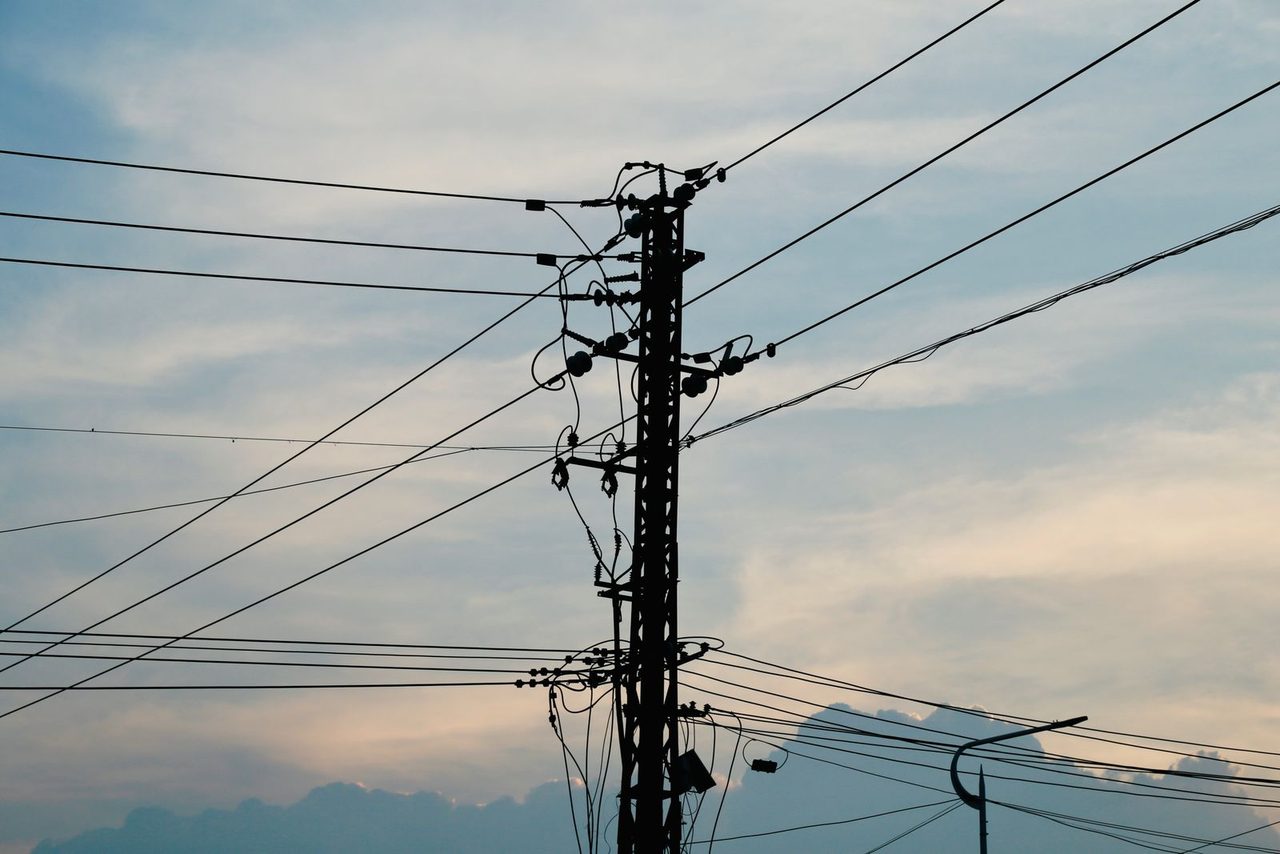
The supply chain for fusion is quietly becoming a serious industrial sector. The machines need high-temperature superconducting magnets, precision-manufactured components, vacuum vessels and materials that survive neutron radiation - and the companies building them are creating real manufacturing demand today. Even if the first fusion plants are a decade away, the industrial base being built now has value in its own right, and it overlaps with the supply chains of other advanced technologies.
For anyone following the engineering, the numbers are extreme and the units matter. Plasma temperatures in millions of degrees, magnetic fields in tesla, pulse energies in megajoules - comparing claims across experiments and companies requires keeping the units straight. Keeping the units straight - megajoules against kilowatt-hours, tesla against gauss, plasma temperature against wall temperature - is the kind of small discipline that helps, especially when press releases mix systems to make results look bigger than they are. Fusion is a discipline where the details are literally physics, and the details are getting more serious every year.
What would count as real proof of progress
Because fusion claims travel fast and disappoint often, it helps to separate the milestones that matter from the ones that make headlines. A record pulse energy number is not proof of a power plant; what actually moves the field forward is narrower and slower.
First, net electricity, not net energy. Experiments that produce more fusion energy than the energy delivered to the fuel are landmark physics results, but a plant must produce more electricity than the entire facility draws from the grid - lasers, magnets, cooling, everything. That gap between "net energy" and "net electricity" is where most public confusion lives, and closing it is an engineering programme measured in years.
Second, repetition and endurance. A machine that ignites once has proven a principle; a machine that runs pulse after pulse, day after day, proves a power station. Materials that survive years of neutron bombardment, blankets that breed enough tritium to refuel the reaction, and divertors that exhaust heat without melting are the unglamorous tests that will actually decide which designs survive.
Third, the supply chain itself. High-temperature superconducting tape, precision magnet windings, tritium handling expertise - the companies scaling these inputs today are building the industrial base every future fusion plant will depend on. If you want a leading indicator that does not depend on any single machine working, watch the factories, not the press releases.
Frequently Asked Questions
Is fusion actually working yet?
Fusion experiments have achieved ignition and net energy gain at the point of fusion - but sustained, plant-scale operation that produces more electricity than the plant consumes has not been demonstrated. That is the engineering step the industry is working on now.
When will fusion power reach the grid?
Optimistic private companies target the 2030s for demonstration plants, but most experts expect meaningful grid-scale fusion in the 2040s at the earliest. Fusion has a long history of being thirty years away; the current era is the first where the engineering is real.
Does fusion produce radioactive waste?
Yes, but far less than fission. Fusion activates the reactor's structural materials, so component waste is radioactive for decades to a century rather than the many thousands of years associated with spent nuclear fuel. The fuel itself - deuterium and tritium - is consumed in the reaction, and there is no long-lived fission product chain to store.
Why has fusion taken so long to develop?
The conditions required are extreme: plasma tens of millions of degrees hotter than the Sun's core must be held stable by magnetic fields or compressed by lasers, in a device made of ordinary matter. Every generation of machines solved one problem and revealed the next. What changed recently is not the physics but the engineering tooling - better superconductors, simulation, and private capital willing to fund iterative hardware.
Related Stories
This page is an informational compilation. For reference only — please refer to each source’s official documentation.
For reference only — please refer to each source’s official documentation.
For reference only — please refer to each product’s official documentation.
Images: Pexels (free license) · Photos by contributors on Pexels.
Privacy Policy · Contact